Friday, February 14, 2025

Film Opening Idea

After a lot of research and brainstorming, Miranda and I finally came up with what we think is an AMAZING opening for a horror/suspense film.

The overall idea for the film is for this girl to slowly have things go bad for her and get worse and worse. At first, she thinks it's just things that happen and that it's happening to everyone, but slowly, she realizes that it's targeted towards her. And through these terrible occurrences, there is a girl who just happens to always be near her when it happens. They get closer, gaining each other's trust, just for the main girl to realize that this new girl is the reason everything is happening. The new girl is doing this because she is obsessed with the girl's boyfriend and will stop at nothing to get him, even if it means hurting the girlfriend. The girlfriend soon finds out she is a psychotic girl with a history of being obsessed with people's boyfriends and hurting others. 

To start it off, a close-up shot of a gloved hand is going to appear and will be grabbing two items, a thumbtack with string attached and a picture. Then, it is going to show that said hand will be placing it on a board and a zoomed-in tracking shot of the string along the board. A series of shots similar to this one will appear one after another but with different pictures and items. For one, instead of just a picture of the young girl and her boyfriend, it could be a picture of just her from afar or a screenshot of her social media or even of her house. It could also include items of something she used with a label and such.Crazy WallsAfter the mystery person sets the final item on the board, the camera will trace the red string, landing on a picture of just the girl. Then, it zooms out, showing the entirety of the board and that all the strings lead back to her. Side note: During all these shots, the credits will be slowly appearing but not including the actors in the film as those credits will appear in the second scene.  After that, it will cut to a black screen with the title that we are yet to come up with. Then the second scene will being. 

It will start with a camera pan to the girl in the pictures waking up to her alarm with her boyfriend besides her and they just start to doing normal things as they would until randomly a vase falls and shatters catching the girls attention. At the same time the doorbell rings and she goes to answer it, and it's the new girl just hoping to introduce herself. As they both are talking the boyfriend has a dark feeling that he knows the girl from somewhere but can't remember. And the film will end with a shot of the boyfriend telling the girlfriend that it all seemed odd but they girlfriend disregards it. 


Wednesday, February 12, 2025

Group Meeting Reflection

During class, we were separated into random groups, and we meant to discuss our ideas for our 2-minute film opening and receive some feedback. 

At first, everyone introduced themselves and began talking about ideas we had in mind. I spoke about my idea for my film opening to be a series of close-ups which will end into the final result of a "detective" board with a variety of images with red string all leading to one young girl, then cut to the title, and then the scene will continue with the young girl doing something in her day to day life. 

The others in my group liked my idea a lot more than I was expecting them to. And they gave me a bunch of cool ideas. One idea is to not give away who is pinning all these pictures and memorabilia on the board, to have the person pinning them wear gloves. To be able to give the scene more of a suspense tone and leave the audience wondering who the person is and if they are dangerous. I really liked the idea because it was going to give my film a different feeling than if I had just had the hand pinning it and clearly giving who it is away later in the film.  

My friend in the group also mentioned that in a film that she watched that had a similar opening to mine, they included the credits on post-its as they were applying them to the board. I spoke to my partner Miranda about it, and we absolutely loved the idea and thought it was such a creative way to include the credits on the screen without having to edit it onto the film. But as we thought deeper about how to incorporate that idea into our film, we realized that it could be really easy for the credits to "get lost" in a sense on screen. With the plan of having the shots fast-paced, it could be easy for the audience to not notice the credits and completely disregard them. This is completely what we don't want because, after all the research we have done for the credit sequence, we want it to be noticeable. 

I was also able to give some advice/feedback on the ideas of the other people in my group. For example for Lee's project that focused on the main character was in a toxic relationship and there is another boy who is "in love" with the girl has to see as the toxic boyfriend drives up to the girls house and then is getting mad at the girl, yelling at her to get in the car and then driving off angrily. I had advised her to start the scene in a public area rather than at a house so they have more opportunity to have variety of location and to make it easier to film. I gave that as feedback because I think they could get more variation of shots of the boy seeing the girl being treated this way, and the location could be able to set the time for the film. 

I found this group meeting to be super beneficial. While Miranda and I were in different groups, we were both able to discuss all the feedback we had gotten and talk about how we could change or include those things into our film. 

Sunday, February 9, 2025

Film Opening Schedule

My group has outlined a schedule for the entirety of the making of the 2-minute film opening. This schedule may differ depending on how the process goes. For example, if we do not film certain shots we need in a certain week, we may have to continue filming in the following week. 

Project Schedule- 

Week 1:

- Decide on group members.
- Discuss 2 possible genres with my group and decide on one.

Week 2:

- Brainstorm different ideas for opening.
- Watch several film openings as a group and decide what we would like to incorporate in ours and what we wouldn't like.
- Meet with Mrs. Stoklosa and receive feedback on possible ideas for the project. 

Week 3:

  • Choose an idea for our opening.
  • Make a storyboard or script of our idea.
  • Research media theories and incorporate one in our idea.
  • Meet with Mrs. Stoklosa and receive feedback.

Week 4:

  • Research and plan how we would like to develop our character.
  • Research and plan mise-en-scene elements correlating with our genre and idea.
  • Research and plan audio for opening.

Week 5:

  • Begin the filming
  • Begin editing film opening.
  • Document any filming, foley, or editing that is done.

Week 6:

  • Continue and finish the filming process.
  • Continue and finish editing film openings.
  • Document any filming, foley, or editing that is done.
  • Research for question #1 of CCR post.

Week 7:


- Make final adjustments to film opening.


- Research for question #2 of CCR post.


- Research for question #3 of CCR post.


- Research for question #4 of CCR post.


- Begin final reflection of project.


Week 8:

  • Continue and finish the final reflection of the project.
  • Create blog post with links to the final CCR's and completed film opening:

Saturday, February 8, 2025

Color Schemes

I believe that having a clear color scheme in a film is really important. Having a color scheme can establish an atmosphere and can be symbolic. 

If a horror film was created with happy and vibrant colors, it wouldn't be able to achieve the feeling of fear that a typical horror film would. The use of color palettes sets the tone of a film. Dark and desaturated colors would create an oppressive atmosphere and world compared to a film that would give the sense that everything is okay and happy. 


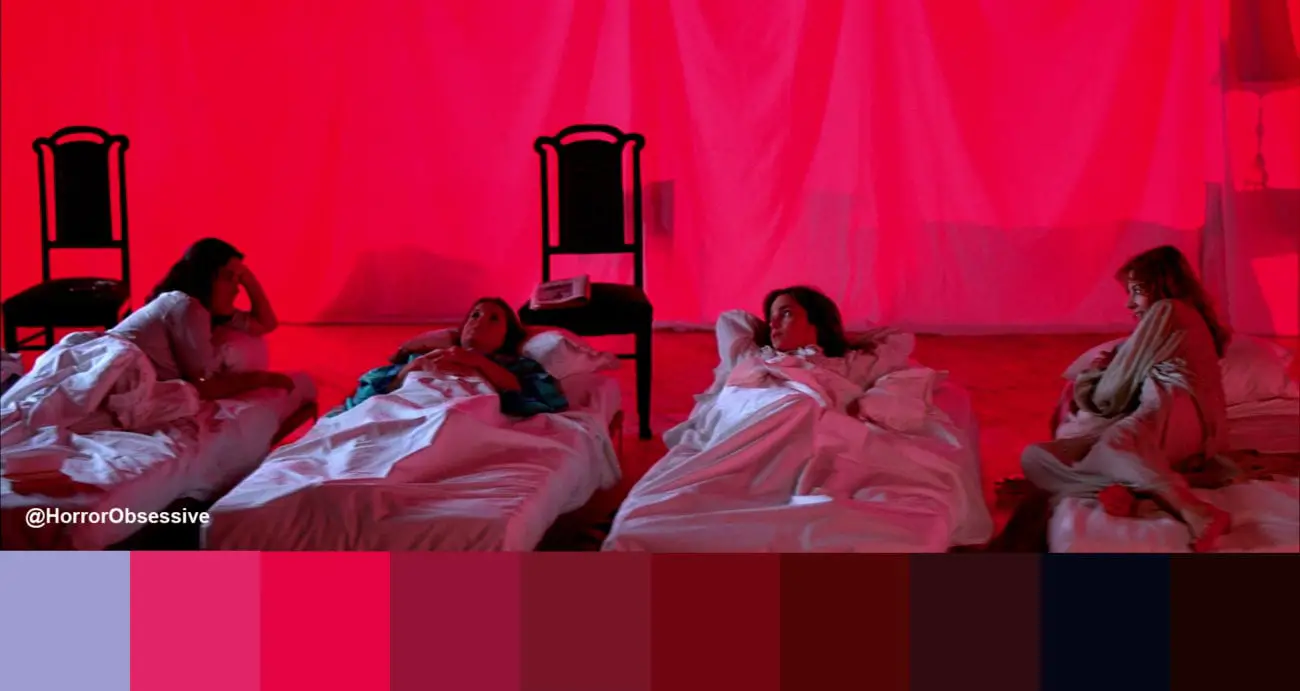
But if a horror film were to use vibrant hues and it correlates to the plot, it could be used to create an unusual aura and unsettle the audience. After doing some research, I landed on the Raindance website, which used the example of Suspiria by Dario Argento, which used vibrant colors to make the tone of the film unsettling.
The saturated colors of red, blue, green, and yellow make the film seem out of the ordinary and like it is a dreamlike world. The colors create an uneasy atmosphere, which supports the idea that the main character is in a world where the normal rules don't apply. 
          How 'Scream' Explored the Exploitative ...
A horror film like Scream uses the color scheme to connect and create tension. During the parts of the film that don't have any shots that are meant to create fear, regular colors are used, and the scenes are filmed in outdoor areas to give a sense of normalcy. When it comes to the "scary" scenes and the scenes with tension, dark and bleak colors are regularly used. Black is the most common color used in these scenes because in horror, it symbolizes the unknown and tension. 


Thursday, February 6, 2025

Analyzing horror/suspense film openings.

I analyzed 3 horror film openings from artofthetitle.com; these film openings were used to inspire and show me different methods of setting up the opening for a horror/suspense film. 

Get Out 

The film opening for Get Out is not my favorite. I think that for a horror or suspense opening, it should hint that something bad is going to happen throughout the film; this opening does not do that. This could have been a technique that the creators used so when the climax was happening in the film, it would be more shocking. Since, as a group, we are only to make the film opening, it would not be the best inspiration. My group is going to focus on hinting at the problem early on in the opening, and this film opening does not portray that. 

Most of the shots just consist of the woods from the point of view of a moving vehicle. The scene cuts to black and white photographs that we can infer is the man who was holding a camera, earlier in the opening. One of the shots is of a living room, which hints that the man and woman are involved with one another. The shots following that support that idea are shots of the woman going up the elevator with food, knocking on his door, and then kissing the man. 

The Black Phone

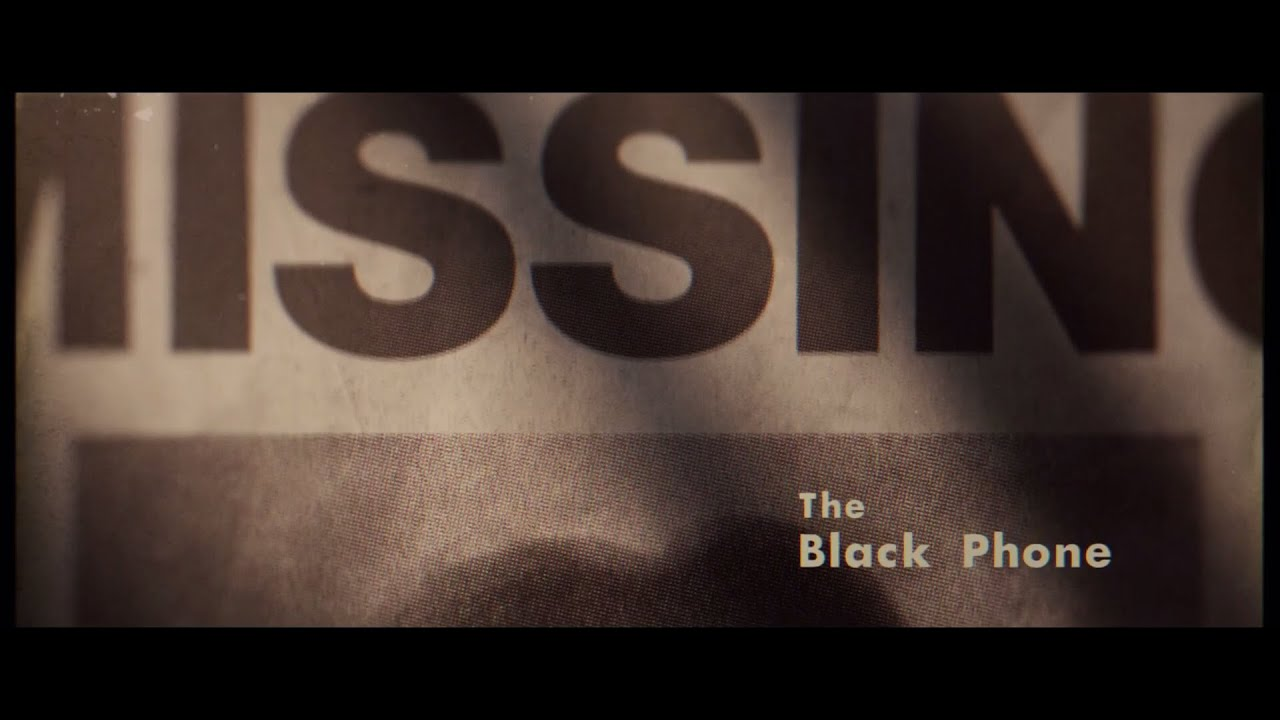
To effectively hint at the problem in the opening, I am going to take a route more similar to The Black Phone. The opening begins with a tracking shot of a boy riding a bike, and then it reveals a black van turning the corner. When the van comes into the frame, the background music decreases, and the screen turns black. All of this works together to hint that something went wrong with the boy and the van. One can assume that he got kidnapped by whoever was in the van. 

To support the idea that many viewers were gonna have, various posters, objects, and places were shown in a fast-paced movement to foreshadow the accident. One of the props that best supported the idea that the child was kidnapped was the constant appearance of the "missing child" posters. One of the posters even includes a picture of the child who was shown in the beginning. 

Terrifier 2

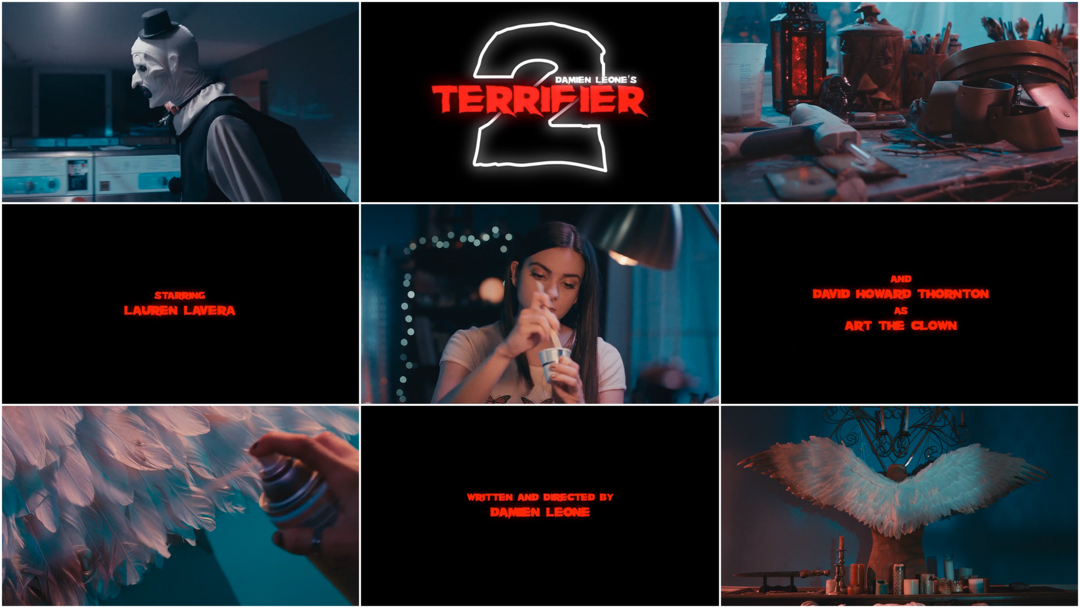
I consider the opening for Terrifier 2 to be an odd opening to the film. The opening scene establishes who Art the Clown is while mopping the floor, and then he proceeds to walk out carrying a trash bag. 

The camera then pans to a man on the floor who has been brutally murdered. The shot of the man bleeding on the floor allows the audience to know that something bad has happened and more is to come. The rest of the opening are shots of a girl creating a costume in a very decorated, crafty room. What made the opening scene very odd to me is that in between showing the young woman create the costume, a black screen would appear to show the credits. I wonder why the creators chose this method instead of having the credits appear during the shots. The black screen would not be on for long at most 19 seconds, but typically around 12. The random cuts to the black screen give a sign of inconsistency. 

Wednesday, February 5, 2025

Credit Sequences


My group (Miranda, Milver, and I) began watching various credit sequences on Art of the Title from past horror films to evaluate the techniques used in the credits. We examined the opening sequences of the films Seven, The Black Phone, and Terrifier 2. Analyzing these credit sequences provided our group with a clearer understanding of what we would like to include in our scene. 


Se7en (1995) — Art of the Title

Seven

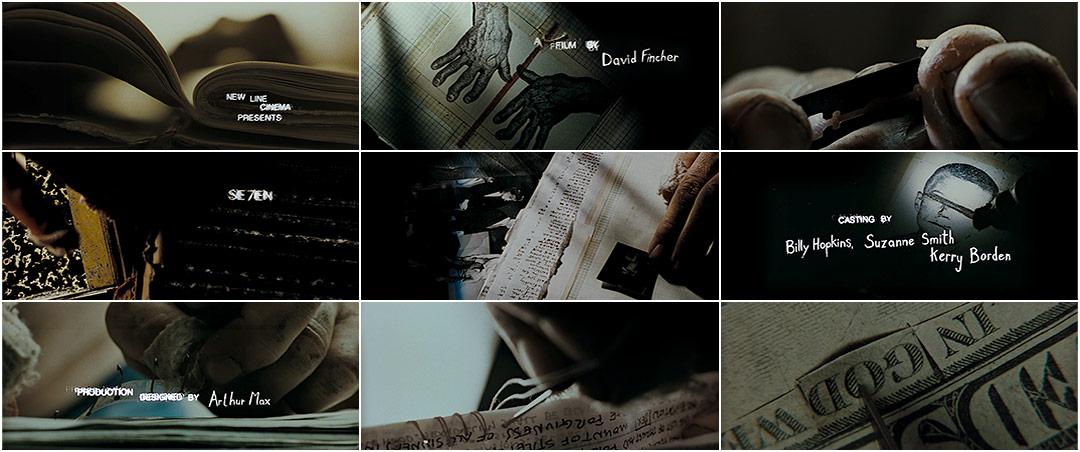
My group plans to use Seven as our inspiration for the opening scene we create. We really liked the idea of highlighting certain items and props that are crucial to how the story unfolds. It gives the film an eerie feeling that we want to ensure is conveyed in our film. Even though it displays some credits on a black screen between shots, the tone and aesthetic of the film make it work, and we see the type of opening sequence. While the editing style is too advanced for us to replicate in our project, we really enjoyed the editing and found it entertaining and, in a way, informative.


The Black Phone

The Black Phone (2022) — Art of the Title

The credit scene in The Black Phone was one of my favorites. I like how they hinted at the problem in the plot in the first 5 seconds and continued to show the setting and the era. The viewers can easily grasp the concept of the film without having anything giving them exactly what happened and who created the problem. The credit sequence also gave off the movie aesthetic, and while it is not something that my group wants to include in our opening scene, we really like the aspect of that. 

Terrifier 2

While we watched Terrifier 2 opening scene with the credits, we noticed that instead of having the credits appear on the screen as the scene progresses, the creators made the decision to cut in between the scenes and include a black screen with the credits. As a group, we learned that this way of including the credits was not the way to go. I felt that it made it seem very choppy, and it wasn't engaging. The opening scene is the most important because it is what grabs the audience's attention and then encourages them to continue watching the film. 
Terrifier 2 (2022) — Art of the Title


Sunday, February 2, 2025

Picking the genre from my Film Opening

This week, we began to learn about the possibilities of our film opening project. I've had a couple of ideas for the two-minute opening, but I have decided to make it a Drama or a Thriller film. Currently, I am leaning more toward thriller film options because I would be able to use more creative freedom and many more techniques than I could for a drama. 

Drama Film- 

Common drama films focus on emotional conflicts and go deep into character development. Drama has many sub-genres like crime, tragedy, and psychological dramas. They revolve around real emotions to connect the audience with the character's experiences. 

Thriller Film-

A typical Thriller film depends on suspense and emotional engagement. I feel like a psychological mystery thriller film would be the best type to create, it allows for the story to slowly develop and it uses suspense to maintain engagement. Gone Girl and Black Swan are two great examples of psychological thriller films. 

Film Opening- 

I want to focus my film on a young girl who moves back to her hometown after she inherits a house that was in the family, she will find out the horrid truth of her family. Thriller films are created to give the audience a sense of tension, suspense, and anticipation. I want to make my thriller a slow-burn film, allowing tension to escalate and for twists to appear. After researching common themes of psychological thrillers I want mine to focus on the theme of deception. 

I was looking up proper and common techniques for cinematography for these types of films, and I noticed that extreme and regular close-ups were essential to telling the story. They give the audience a sign of "This is important, keep watching." 
IGone Girl (2014), they used extreme close-ups of Amy's journal entries to give Amy's version of the events. With lingering shots on certain pages and phrases, it tricks the audience into questioning if Nick is guilty. I want to use close-ups similarly, focusing on props that are an essential part of the development of the story. 
 
Slow zooms are also crucial in developing tension in the film, for example, a slow zoom into a character's face as they are discovering something allows the audience to see how the character is feeling, or a slow zoom into a dark area will allow tension to be created.  I want to be able to use various camera techniques to achieve tension and be able to develop the deception theme in the film. 


Friday, January 31, 2025

Transitioning to Portfolio Project

This is the start of my blogging journey while creating my Film Opening Portfolio Project. The following blogs will be all about the creation of my 2-minute film opening, from creating the story to filming and editing the project. This past week we were introduced to film openings and learned about how to develop meaning during the opening. 

Wednesday, December 18, 2024

Music Marketing

The Behind the Scenes of filming for the 'In Love' Music Video by Arrogant Lover 


The creative process for creating the video took group comments and ideas while brainstorming and put it all together to create the final music video. Storyboarding allowed for us to visualize the shots we were meant to use while filming. 


Friday, October 18, 2024

Representation

 The popular film series The Hunger Games is based on Suzanne Collins's books. It is set in a future in which the Capitol controls many districts that makeup civilization. The two primary characters of the narrative are Peeta Mellark and Katniss Everdeen. Important themes like gender roles, survival, and the struggle against oppression are clarified for us by their characters.

One courageous and strong figure who defies gender norms is Katniss Everdeen. She looks for her family at first, but she soon turns into a symbol of defiance and optimism against the Capitol. Katniss demonstrates that women may be both strong and compassionate by displaying both strength and vulnerability. One of Katniss's most important events is when she offers to compete in the Hunger Games in place of her sister Prim. Her willingness to put her life at danger for her family is demonstrated by this courageous act. Her transformation into the "Mockingjay" from a survivor questions what a female character can be.

Peeta Mellark, on the other hand, symbolizes an individual aspect of masculinity. He is intelligent, caring, and emotionally resistant. Rather than being simply another "male hero," Peeta exhibits the value of empathy and compassion in challenging situations. Peeta's declaration of love for Katniss during the Games is a significant moment. This allows them to win over the audience and demonstrates the strength of love as a coping mechanism. Being sensitive and emotional may also be a strength, as demonstrated by Peeta's character.

The Hunger Games examines gender and identity using Katniss and Peeta. While Peeta shows that strength isn't only about being tough, it can also come from kindness and compassion, Katniss is a strong warrior who still exhibits her compassionate side. It can also result from relationships and trust. When combined, they demonstrate how a person can have both feminine and masculine characteristics, making them both heroic. The Hunger Games ultimately challenges us to consider how society perceives gender and what it means to be a hero.

Monday, September 30, 2024

One Word Film Project

 The One Word Film Project's goal was to make a brief film that incorporated and portrayed a single word. We were told to tell the story using various camera angles, shots, and editing techniques we had previously learned in class.

My partner and I came up with a few ideas to demonstrate the word "Reminisce" during the brainstorming session. Our choice was to create a short film featuring a high school senior remembering her first year in school beside her best friend.


We were able to visualize our project with plenty of help from our storyboard, which also helped us to understand the limits established by having to film in school. It also helped us in creating the project's setting and story. I used Adobe Premiere for editing this project. Despite it being a complex system I was able to find all the tools required for the task.

Considering that the One Word Film Project was one of our first assignments for the course, I believe that although my partner and I had the right ideas about when to use particular shots and techniques, there was still much space for improvement in how we actually applied them. For example, when we wanted to show a zooming-in shot, it became a difficult task due to both of us having to be in the camera shot. Another example is when filming tracking shots, the shots turned out to be a little bit shaky and not clean which definitely can be improved for the next time filming. 

Final Blog Post

This is the end! Hope you enjoyed my blogs and my film! Here are the links to access everything! Film Opening-  Here! CCR Video 1-  Here! CC...